Mission and Philosophy
My work is grounded in a commitment to fostering meaningful and inclusive mathematics learning experiences that support the whole learner. I believe that learning extends beyond content knowledge to the development of agency, belonging, and mathematical identity.
I am particularly interested in how learning environments shape student experience. When students feel a sense of belonging and are encouraged to take risks, ask questions, and engage collaboratively, they begin to see themselves differently—as capable learners with ideas worth sharing.
Through intentional design and reflective practice, I strive to create spaces where curiosity is encouraged, mistakes are valued, and learners are supported in developing both confidence and understanding.

Meet Tina
I am a mathematics educator with over three decades of experience working with first- and second-year undergraduate students. I hold a master’s degree in mathematics and am currently a doctoral candidate in education, with a focus on fostering positive mathematical mindsets and meaningful learning experiences. Through both my teaching and research, I have seen how students can enter mathematics classrooms with a fragile mathematical identity—shaped by past experiences, fear, or the belief that they are “not a math person.” Supporting students in reimagining their relationship with mathematics is central to my work.
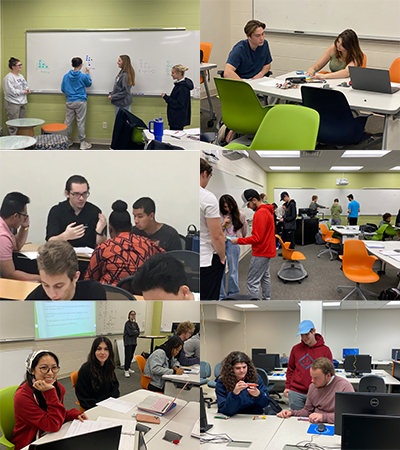
In my classroom, I strive to create a supportive and inclusive learning community where students feel comfortable taking risks, asking questions, and learning from one another. We establish norms together, encourage collaboration, and create space for multiple ways of thinking and understanding.
I believe in modeling the kind of learner I hope my students will become—open to growth, willing to engage, dedicated to effort, and committed to reflection. In my classroom, I often share the important reminder: MATH—Mistakes Allow Thinking to Happen.
My Design Approach
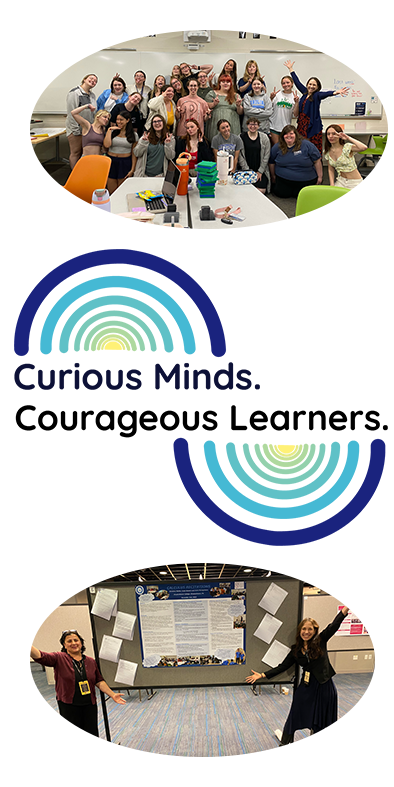
My approach to learning design is grounded in creating meaningful, engaging experiences that support the whole learner. I design with intention—fostering connection, encouraging curiosity, and supporting learners as they build confidence and deepen understanding through reflection and application.
My work is informed by a constructivist and pragmatist lens, drawing on learning design science, mathematics education research, and foundational learning theories. Influences such as Jo Boaler, Carol Dweck, Julie Dirksen, Uri Treisman, and Brené Brown continue to shape my thinking around mindset, collaboration, learning environments, and the role of vulnerability in learning.
I design for environments that support active, inclusive learning—both in physical and digital spaces. In the classroom, this includes collaborative whiteboards, flexible seating, and shared tools that invite participation. In online environments, it includes thoughtful organization, discussion spaces, and opportunities for meaningful interaction. Above all, I believe that strong teacher–student relationships, intentional feedback, and authentic engagement are at the heart of effective learning design.